

Last Updated: November 27, 2026
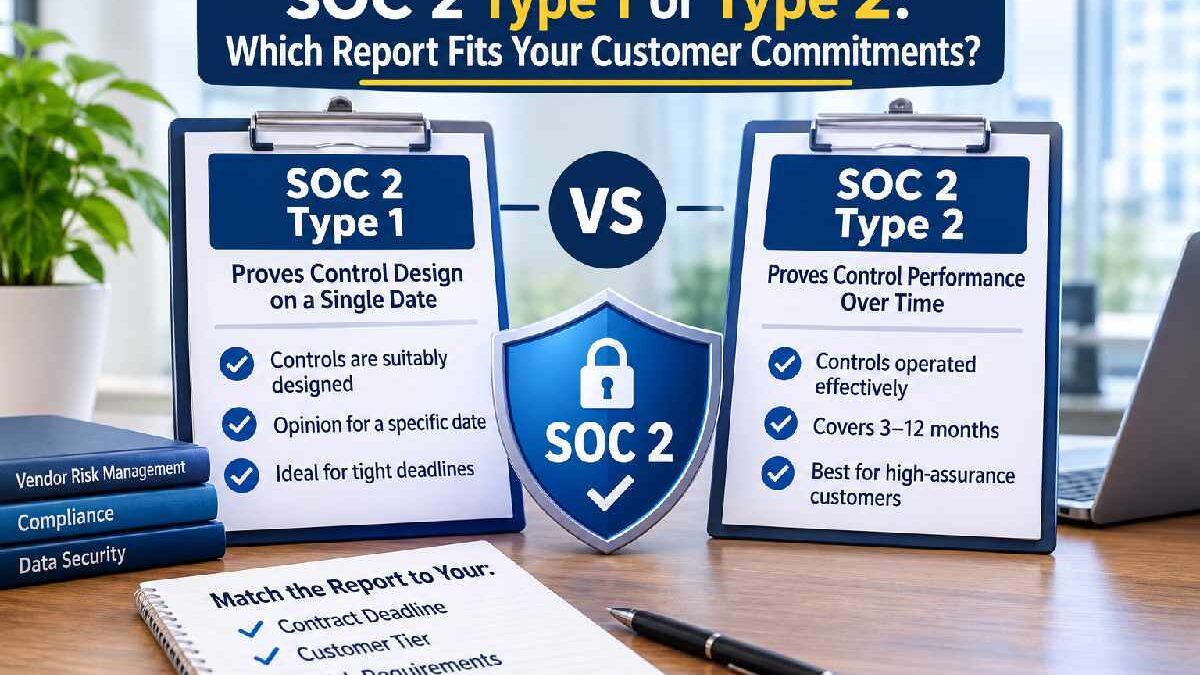
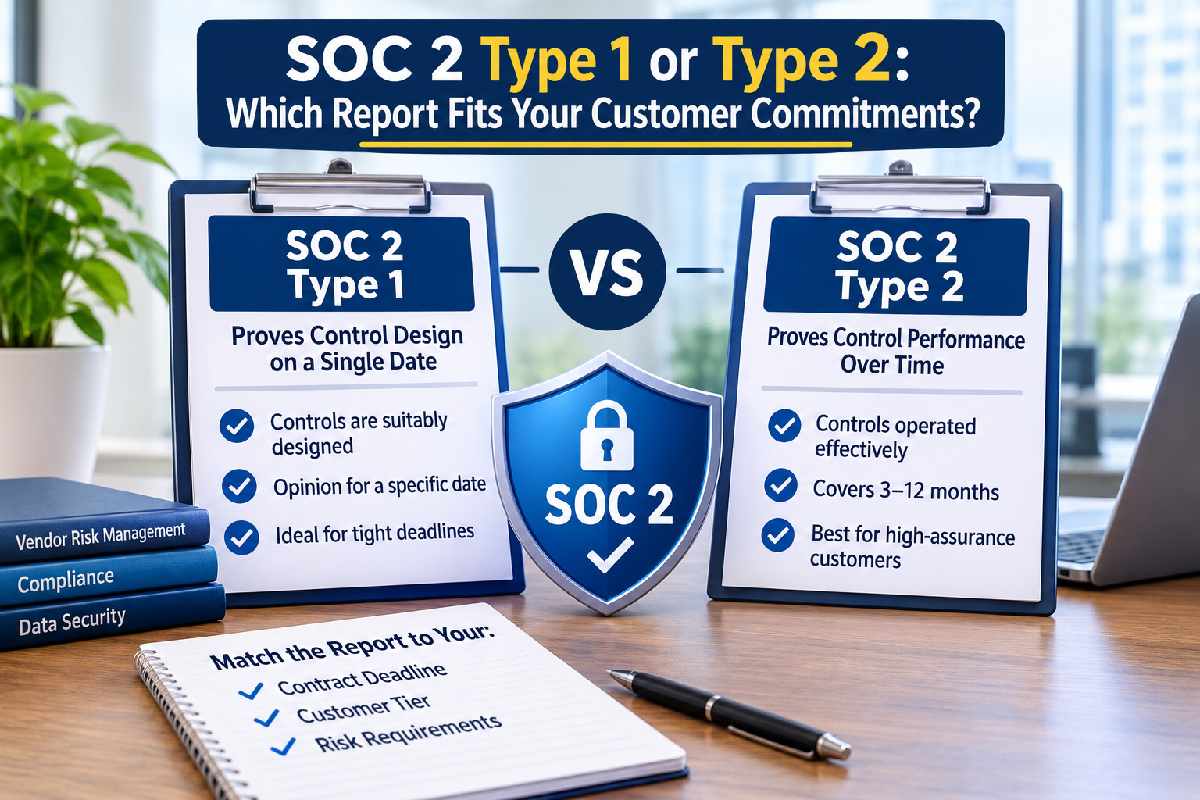
The difference between SOC 2 Type 1 and Type 2 is what the auditor verifies: control design on a single date, or control performance across several months. That distinction shapes which customer commitments each report can satisfy, so the contract drives the audit plan.
Table of Contents
What each report proves
Both reports sit inside the AICPA’s SOC framework, and both test controls against the Trust Services Criteria: Security, Availability, Processing Integrity, Confidentiality, and Privacy. A Type 1 examination asks whether those controls are suitably designed on a specific date, and the opinion covers that date alone. A Type 2 examination adds a second question: whether the same controls operated effectively across an observation period, typically three to twelve months.
Because the Type 2 auditor tests evidence generated across that window, the report shows consistent operation, where the Type 1 report shows design. When scopes align, work on Type 1 can support a later Type 2 examination. Only an independent CPA firm can issue either report, and the opinion states the scope and criteria, and lists any exceptions the auditor found. The date on a Type 1 report and the period covered by a Type 2 report both appear on the face of the opinion, so a customer can tell which assurance it holds.
What enterprise vendor risk teams accept
Enterprise procurement runs through vendor risk management review, and the report type changes how that review ends. A Type 1 report tells the risk team that controls were designed properly on one date, which large customers read as proof of intent. A Type 2 report tells the same team that controls held up across months of real use, and that is the assurance level tied to production data access.
The global average cost of a data breach reached $4.88 million in 2024 (IBM), and that figure explains why procurement insists on controls tested over time. A current SOC 2 report also shortens the security questionnaire, because the auditor has already answered most of what the questionnaire asks. Smaller customers often accept a Type 1 report alongside a written plan for Type 2. The customer’s tier sets the requirement before any audit work begins.
Where Type 1 fits
When a contract deadline lands inside the next quarter, a long observation window can’t finish in time. A Type 1 report can, because it needs controls designed and documented by a chosen date, with no months of testing after. Companies in this position use Type 1 to meet the immediate compliance demand, then open the Type 2 observation period once the first report is issued. Type 1 isn’t a required step before Type 2, and some companies skip it when their timeline allows.
Used this way, it unblocks a deal while the longer examination runs. The sales team gets dated compliance evidence, and the Type 2 observation period starts with controls already documented. The customer should hear that sequence directly, so the second report arrives before the next scheduled vendor review.
The operating cost of a Type 2 window
A Type 2 audit spreads its cost across the full observation period, because evidence has to accumulate month after month. A readiness assessment before the window opens finds weak points early, and many companies run that phase with soc consulting support so gaps close before formal testing starts. Access reviews, change tickets, log retention, and policy acknowledgments all have to happen on schedule and leave records the auditor can test. In cloud environments the evidence sits across several systems, so collection needs a named owner and a fixed calendar.
Control drift is the main risk during that stretch: a team bypasses a procedure under deadline pressure, and the exception is recorded inside the testing window. Starting the window before controls are stable risks a report full of exceptions, and that report still goes to the customer. Once the window opens, engineering and IT handle the daily work, and each missed control becomes a possible exception in the final report.
Matching the report to the commitment
Start with the contract deadline, because it fixes the latest date a report can reach the customer. The customer’s tier then determines which report type that date must produce. A Master Services Agreement with a regulated enterprise usually points to Type 2, since that customer’s risk team will ask for operating effectiveness before granting data access. A mid-market customer with a near-term renewal may accept Type 1 now and Type 2 at the next review.
If procedures are still informal, allow time for remediation before opening any observation window, because exceptions recorded early follow the report to every customer who reads it. A company that signs the agreement first and scopes the audit second inherits whatever dates the deal already promised. If the dates can’t line up, renegotiate the commitment before fieldwork starts, because a revised date costs less than a missed one.
Type 1 proves design on a date, and Type 2 proves operation across months. The choice is mostly a scheduling decision. Match the report to the commitment, and the compliance budget supports revenue already under contract.