

Last Updated: November 25, 2026
Ask buyers what they want after an order ships, and the answer is consistent. In a Convey consumer study reported by Digital Commerce 360 in 2019, 93% wanted updates throughout the delivery process, and 47% said they would not order again from a brand with poor delivery visibility. The people answering those surveys are the same people who sign for pallets and multi-ton consignments at work. For carriers and delivery operators, customer-facing transparency is best understood as an operational efficiency program that customers can see, and it deserves the same scrutiny as any other investment in the fleet.
Table of Contents
The Amazon effect now applies to commercial freight
The consumer parcel market has spent years training buyers to expect a live map and a delivery window measured in minutes, and that training doesn’t switch off when those buyers step into a professional role. A manager who watched a parcel approach their home in the evening will open a laptop the next morning and expect equivalent visibility over a commercial consignment worth many times more. This is the Amazon effect applied to freight, and it has quietly rewritten what a standard delivery experience looks like inside a business-to-business contract.
Last-mile logistics is where that expectation is hardest to satisfy. The final leg is the most expensive part of the journey and the only part the customer witnesses directly, so the whole operation behind it gets judged on what happens in the last few miles. A carrier can run a flawless linehaul and still lose the account over a bad final hour. Visibility is how the carrier manages that hour, because a customer who can see the freight stops guessing, and a customer who stops guessing stops calling.
The shift appears in procurement documents before it first appears in complaint letters. Freight tenders now ask carriers to describe their tracking capability and the notifications consignees receive, which means visibility has become a criterion on which contracts are awarded. A carrier without a good answer may be filtered out before the price conversation starts.
What a “where is my order” call really costs
Follow one of these calls through a typical operation. The customer phones because a consignment hasn’t arrived yet at the expected time. The support agent has no live data, so the agent contacts dispatch, and dispatch radios or phones the driver, who answers at the next stop and reports a position. That answer travels back along the same chain, and by the time it finally reaches the customer it is already going stale. Three people have spent paid minutes reproducing a fact the vehicle already knew.
The driver already knows the answer.
That detail reframes the whole cost, because WISMO inquiries are, at bottom, an access problem: the information exists, but it sits locked inside the cab and the dispatch room. A self-service tracking portal gives the customer direct access, and automated SMS or email alerts at each milestone (collected, on its way, one stop out, delivered) settle the standard questions before they form. How many of those calls would still happen if the customer could see the vehicle on a map? A support desk that no longer absorbs that stream gets the hours back for the tangled cases that genuinely need a person, and those are the cases where customer satisfaction is actually decided.
A delay reported early is a different event
Status questions are the routine case, and the harder test is the exception. Weather, traffic, roadworks, and breakdowns are part of the territory, so every network produces delivery exceptions. The difference between operators is who starts the conversation that follows. When a customer discovers a missed window on their own, the damage has usually already spread: the dock crew has stood idle and their own customer has already received an apology. An automated exception alert can interrupt that sequence early. The moment an ETA slips past an agreed threshold, the receiver gets a revised time and a reason.
The alert creates room to act. A receiver warned at ten o’clock about a two-hour slip can rebook the crew, reshuffle the dock, warn the downstream customer, and hold the production slot, while the same slip discovered at noon leaves nothing to rearrange. The alert itself has to carry useful content, the revised ETA and a plain-language reason, since a message that says only “your delivery is delayed” starts a fresh round of calls. Carriers sometimes hesitate to send bad news on the theory that silence buys time, but the customer’s clock is still running either way. A delay reported early is evidence that someone is watching the freight, and over the life of a contract that evidence builds trust.
Manual tracking cannot keep up
Everything described so far depends on one basic precondition: the business has to know where its vehicles are, continuously, without asking. That is exactly what manual tracking cannot provide. A spreadsheet updated when a driver phones in records only where the fleet was at the last check-in. It is assembled from memory and goodwill, and it goes stale between entries. Check-in calls also scale badly in both directions, since each added vehicle means more calls and each call takes driving time from the schedule everyone is trying to keep. The information ends up scattered across the dispatcher’s notebook, the driver’s phone, a shared spreadsheet, and the customer’s own inbox. No two people are likely to agree on the same version of events.
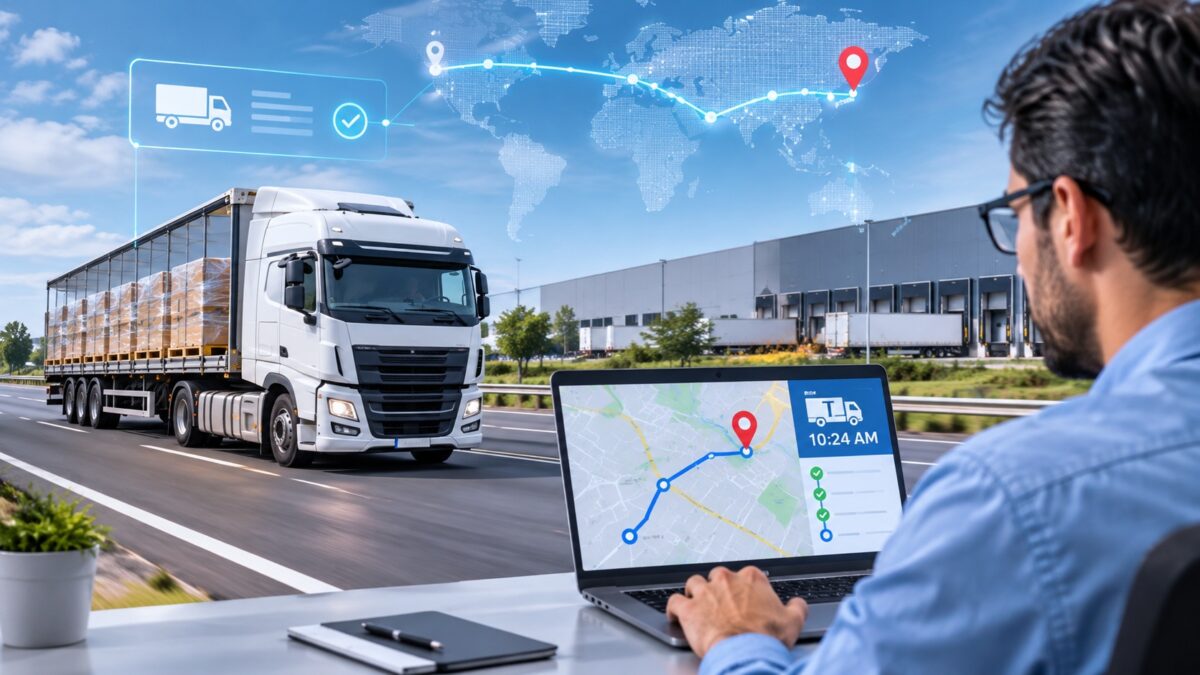
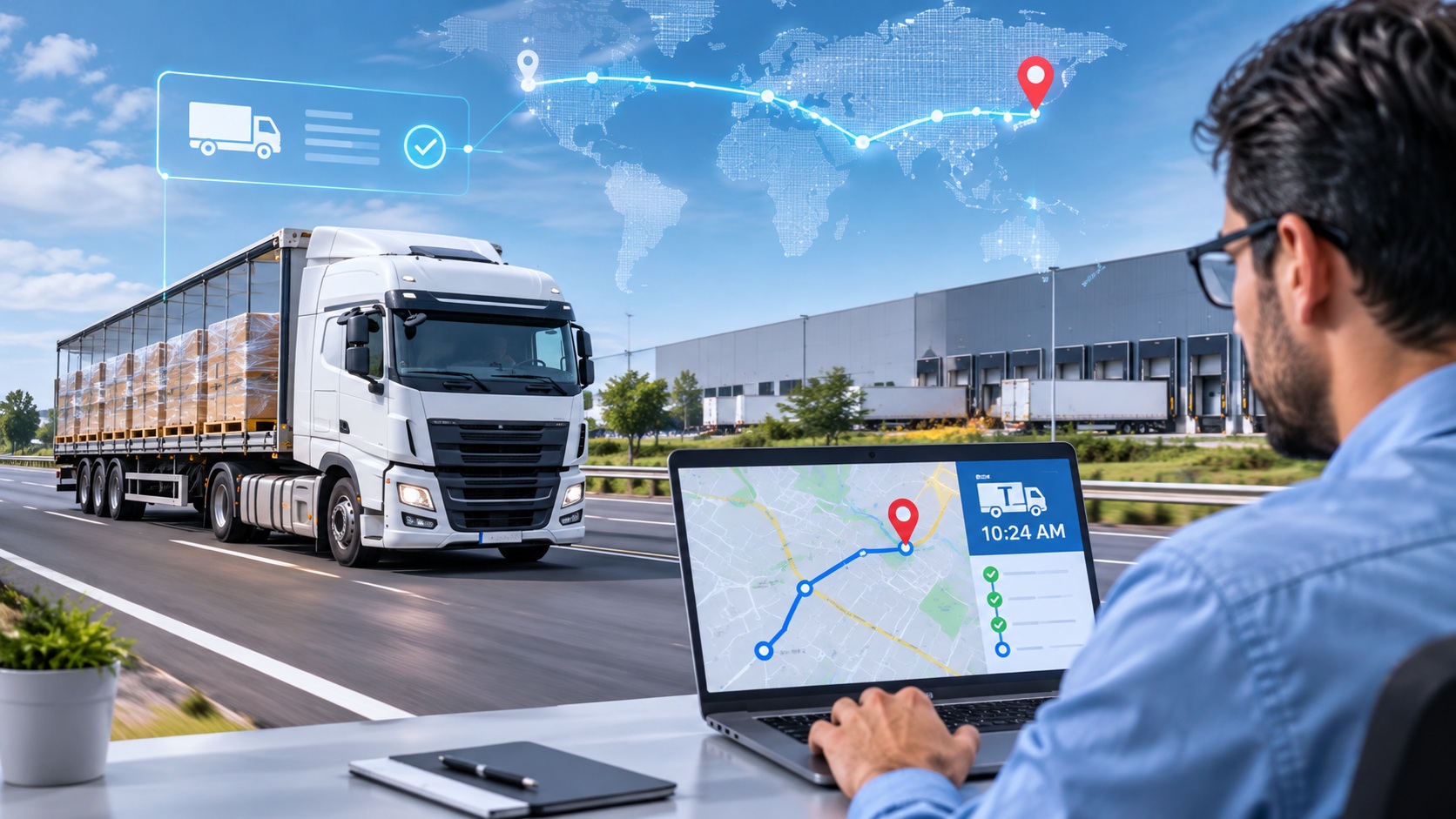
Closing that gap is a software decision. Courier management software replaces the check-in call by drawing GPS positions from the driver’s mobile app and publishing them to the dispatch screen and the customer-facing tracking portal at once, so real-time parcel tracking stops being a task someone performs and becomes a property of the system. Dynamic ETAs recalculate as conditions change, exception alerts fire on their own, the customer portal updates itself, and API connections push the same milestones into the shipper’s own systems. One record, kept current by the work itself, is what makes the rest of these practices cheap enough to run every day.
Proof of delivery is a financial document
The same discipline applies to the handover, which is the moment with the most money attached to it. Paper proof of delivery fails slowly and then all at once: the signed docket rides around in the cab for days, the invoice waits for it, and when a dispute surfaces months later the evidence is a coffee-stained signature nobody can read. Digital POD reverses that entire sequence. A photo of the consignment in place, a signature captured on glass, a timestamp, and the GPS coordinate of the drop are created at the moment of delivery and available everywhere seconds later.
The financial effect appears in two places, claims and billing. In a claim, a customer who says the goods never arrived, or arrived damaged, can be answered with evidence. A dispute that once took weeks of phone calls can close with a single message that includes the photo and the coordinates. In billing, when the POD lands in the system at the moment of the drop, the invoice can go out the same day, and the gap between delivered work and paid work shrinks. Returns deserve the same rigor, because reverse logistics without a documented chain of custody invites the same disputes in the opposite direction.
The economics of the first attempt
A failed first delivery is one of the few costs in this industry that arrives twice: once in the fuel and driver hours the attempt consumed, and again in the rehandling and rescheduling the redelivery demands. For heavy freight the bill can also include an idle truck at a dock that wasn’t ready and a crew booked twice for the same job. One common cause of failed deliveries is that the receiver does not know when to be ready.
Precise, dynamic delivery windows address that problem directly. When the receiver gets a window measured in tens of minutes and watches it narrow through the morning, the dock gets staffed and the bay gets cleared, with the forklift waiting, and in residential work someone is simply home. Predictive routing is what makes such windows accurate, because it sequences stops against live traffic and expected service times and produces estimates tight enough to plan a morning around. The first-attempt delivery rate captures all of this in a single number, and it is one of the few service metrics a finance team will care about without translation.
Transparency is now written into the contract
Over the life of a contract, these daily records add up to something with commercial weight. Freight relationships run on service level agreements, and an SLA is only as useful as the record kept against it. When performance data lives in the carrier’s private files, every review meeting becomes an argument about whose numbers to believe. Shared tracking changes the posture of those meetings, because both parties read from the same delivery history: windows promised, windows met, exceptions flagged, exceptions resolved. Compliance becomes a fact that can be audited, and the carrier that can produce that record without preparation walks into renewals with the evidence already assembled.
That evidence also supports customer retention. Winning a new commercial account costs far more than keeping an existing one. Repeat purchases in freight follow reliability with a lag: a shipper expands the lanes it awards to a carrier after quarters of watched, documented performance. The effect reaches the shipper’s own support desk as well, since its team can answer a downstream customer’s delivery question from the same portal instead of placing a call to the carrier. Customer lifetime value in this industry is built in the tracking portal as much as in the truck, because the portal makes reliability visible to the person who signs the contract. Delivery reliability earns the renewal, and visibility lets the customer watch it being earned.
The practical starting point is an audit of questions. First, list every point in the delivery journey where a customer still has to phone or email to learn something the business already knows, then rank those gaps by the volume they generate. Each one is a support cost and a moment where a competitor’s portal looks better by comparison. Close them in that order, and the operation itself can deliver the transparency that the sales deck has been promising.